

available
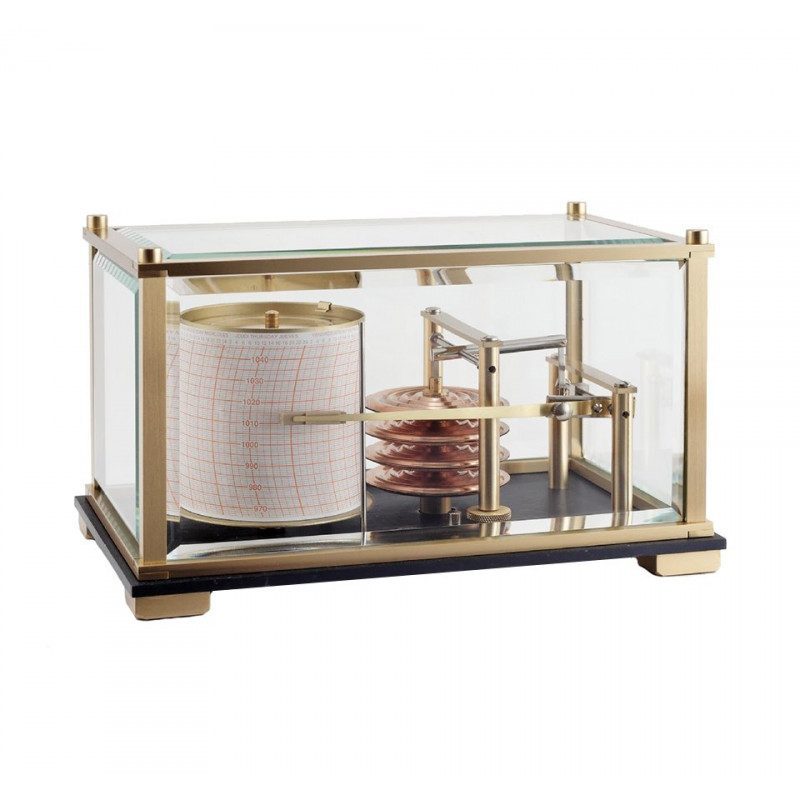


€1,350.00 Tax included
error
Shipped according to supplier's deadline
-
Livraison à domicile : Gratuit
Une question ?
+33 2 97 11 80 95
Detailed features
NAUDET's compact bevelled glass barometer recorder
This barometer is based on the same principle as the needle barometers, the deformation of the capsules activates a small lever equipped with a tracer. Combined with the rotation of the cylinder, it allows to see the variations of the atmospheric pressure.
The characteristics of the compact barometer recorder bevelled glasses of NAUDET
- Dimensions: 21x13x12 cm
- Weight: 2.3 kg
- 4-capsule mechanism
- Accuracy: +/- 5 hPa
- Rotation by 7-day quartz clockwork
- Sold with 1 fiber pen, 1 battery 1,5V type LR6, 50 diagrams reference 11HPA
In the same category
4 other products seleted for you-
<div>
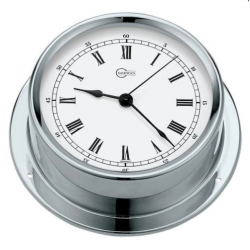
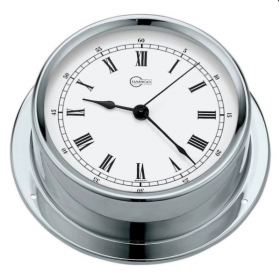
<h2>The REGATTA 100 mm diameter board watch from BARIGO</h2>
<div>This 100 mm diameter on-board watch will fit perfectly on your boat. It is part of the 100 REGATTA range from BARIGO which is exclusively made of polished stainless steel.</div>
<h2>The characteristics of the REGATTA 100 mm diameter edge watch from BARIGO</h2>
</div>
available

-
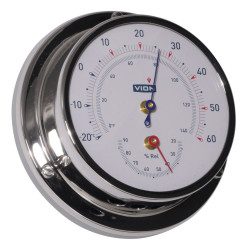
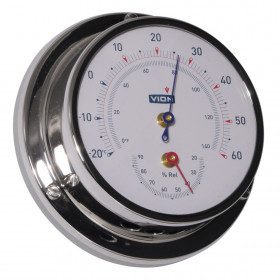
<h2>Thermometer - Hygrometer diameter 97 mm</h2>
<p style="text-align:justify;">The VION series has a recognisable design. Blue and red hands and pointers are used in all instruments and blue and red prints on the dials. The drop symbol is a recurring feature. Supplied with mounting bracket.</p>
<h2>Characteristics of the thermometer - hygrometer diameter 97 mm of Vion</h2>
available
-
<div class="fiche-txt">
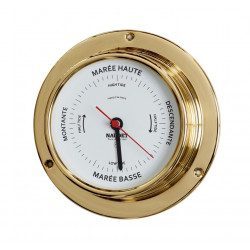
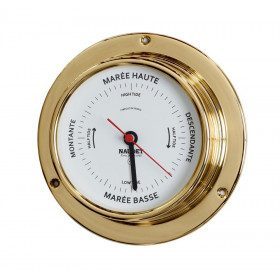
<h2>The NAUDET series 10 tide clock</h2>
This tide clock is available in chrome or brass. It has a collar, which will allow you to fix it on the wall. Its clockwork is set on the lunar day. The dial is engraved with a UV-resistant laser. You will have to adjust this clock according to the place where you will use it. In addition, to minimize the difference between the indicated value and the true tide time, it is recommended to make the adjustment on new moon days. <br /><h2>Characteristics of the NAUDET Series 10 Tide Clock</h2>
</div>
available
-
<div class="fiche-txt">
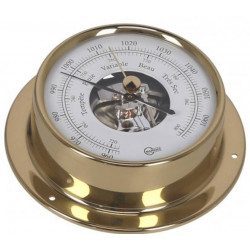
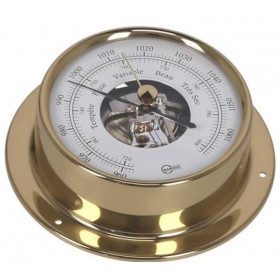
<h2>The 85 mm diameter TEMPO barometer from BARIGO</h2>
<div class="fiche-txt">This 85 mm diameter barometer is perfect to follow you during your expeditions. . It is a barometer with anaeroid movement. This brass barometer has an anti-rust teatment . </div>
<h2>The characteristics of the TEMPO barometer of 85 mm diameter</h2>
</div>
available


 •
•