

available


€950.00 Tax included
error
Shipped according to supplier's deadline
-
Livraison à domicile : Gratuit
Une question ?
+33 2 97 11 80 95
Detailed features
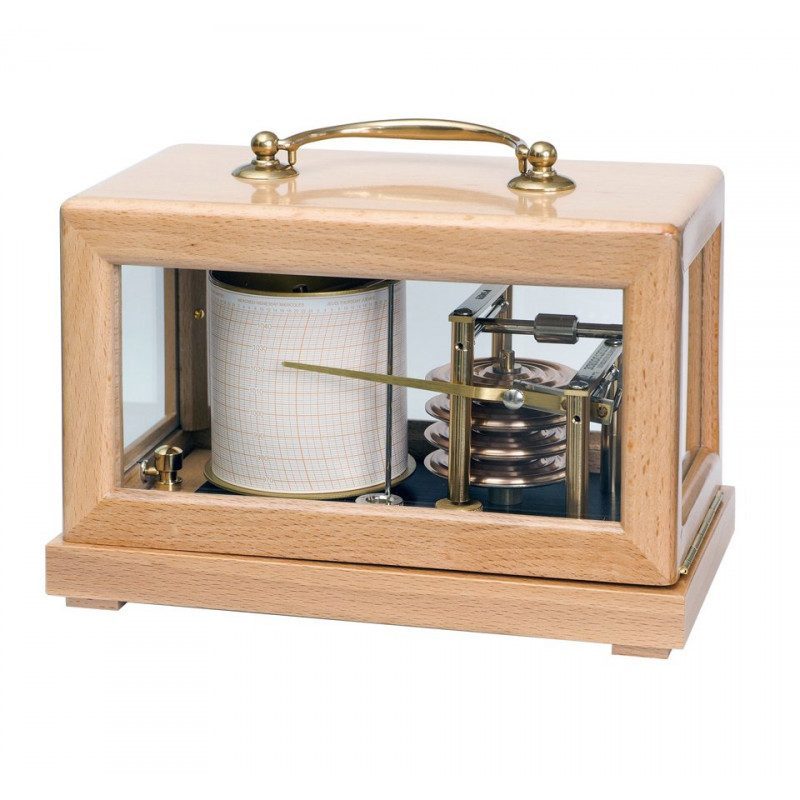
NAUDET's compact barograph recorder
This barometer works on the same principle as the needle barometers. The deformation of the capsules drives a lever equipped with a tracer which allows the variation of the atmospheric pressure to be observed.
The characteristics of the compact barometer recorder of NAUDET
- Dimensions: 20x12x14 cm
- Weight: 1.7 kg
- 4-capsule mechanism
- Accuracy: +/- 0.5 hPa
- Rotation by 7-day quartz clockwork
- 1 fibre pen supplied
- 1 battery 1.5V type LR6 supplied
- 50 11HPa reference diagrams supplied
- Ideal for use at sea
- Finish: wood
In the same category
4 other products seleted for you-
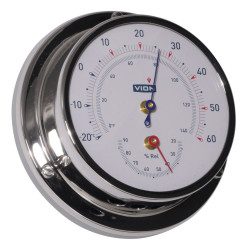
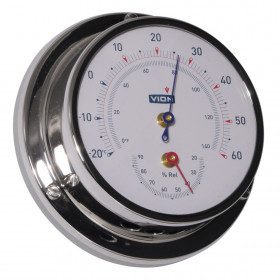
<h2>Thermometer - Hygrometer diameter 97 mm</h2>
<p style="text-align:justify;">The VION series has a recognisable design. Blue and red hands and pointers are used in all instruments and blue and red prints on the dials. The drop symbol is a recurring feature. Supplied with mounting bracket.</p>
<h2>Characteristics of the thermometer - hygrometer diameter 97 mm of Vion</h2>
available

-
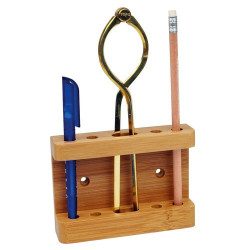
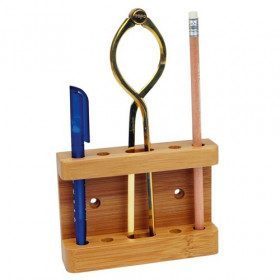
<p>In the category storage accessories, this pencil box will find its place in the chart table area of your boat. Made of Bamboo</p>
available
-
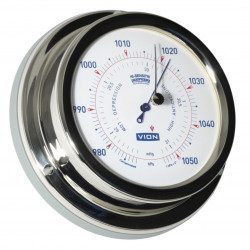
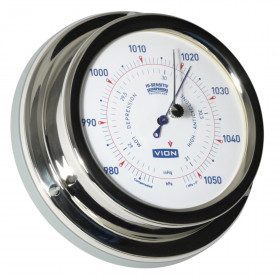
<h2>Hi-Sensitiv barometer diameter 127 mm</h2>
<p>The VION series has a recognisable design. Blue and red hands and pointers are used in all instruments and blue and red prints on the dials. The drop symbol is a recurring feature. Supplied with mounting bracket.</p>
<p><strong>Hi-Sensitiv barometer: the slightest change in pressure is detected by the barometer.</strong><br /><em>What is the high sensitivity mechanism? The movement of the barometer-pointer is amplified 1.5 times compared to the movement of the conventional barometer, which allows a more responsive and easier reading.</em></p>
<h2>Characteristics of the Vion 127 mm diameter barometer</h2>
available
-
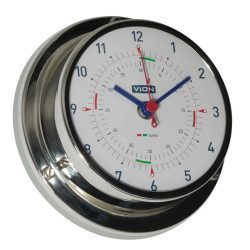
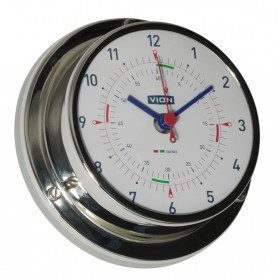
<h2>97 mm diameter marine clock with radio silence indication</h2>
<p>The VION series has a recognisable design. Blue and red hands and pointers are used in all instruments and blue and red prints on the dials. The drop symbol is a recurring feature. Comes with mounting bracket. Operates on one AA LR6 battery.</p>
<h2>Characteristics of the marine clock diameter 97 mm of Vion</h2>
available


 •
•